
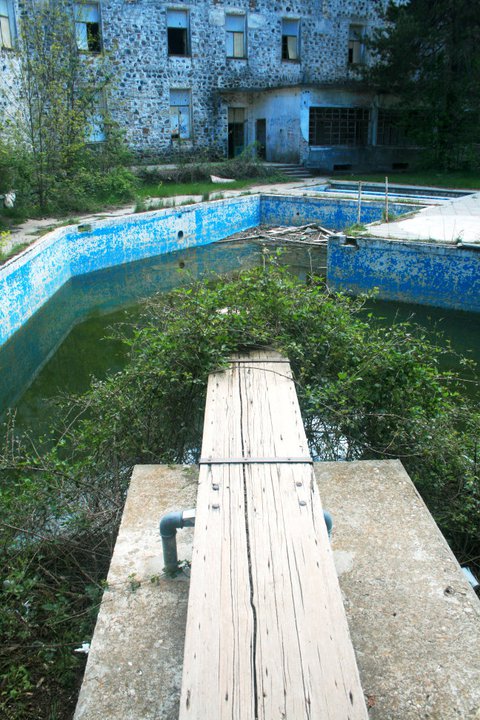
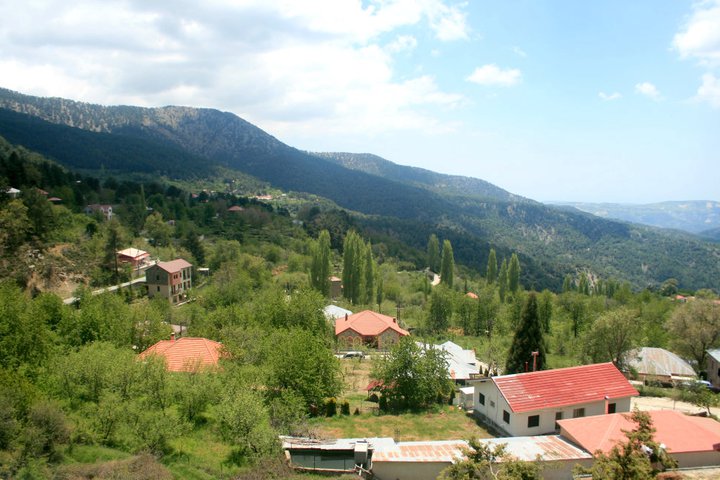
Hidden amongst the towering trees of Troodos Mountain, adjustment to Prodromos Village, Verengaria Hotel eagerly awaits for the person with the vision – and the required cash flow- to restore it to its former glory.
WORDS & PHOTOS SAVVAS LIMNATITIS
Honestly, I can’t recall who came up with the original idea. Not that that is relevant. The fact of the matter remains: fumbling around the amazing world wide web, we stumbled across some images of a dilapidated hotel, high in the Troodos mountain region. Reading about it we were transfixed. The stories, the rumours that surround it are not only capable of making the hair on your back stand, but also good enough to warrant a visit to this almost magical, eerie of places. All we needed to do was rob in a couple of friends to join us on this journey of discovery and we would have been on our way. Easy. A couple of phone calls later it was all arranged.
The following morning, a Sunday, a beautiful early-spring day, we set out for picturesque Proodromos to visit the once-upon-a-time Hotel of Kings. Or Verengaria Hotel as it was known. A place shrouded in legend and mystery. We set out early on. Using the usual route: at the Polemidia roundabout we did a right turn and headed for the hills. Driving past the damn with its deserted church, villages packed to the brim with charm, each equipped with its own kafenion, where visitors can enjoy the invigorating smells of a Turkish coffee – Kypriakos, as it is known around here- or the heat-curbing effects of a frappe with milk, seasonal fruits out our disposal. Winding, climbing roads with the odd herd of sheep grazing by the sidelines, the aroma of the pine trees invading your nostrils, opening them up.
Soon we reached Platres, the hot bed of yore. A bit of a disappointment really. The village has lost its lustre, and all its charm has evaporated into thin air. In my eyes at least. No time to waste though. We had a mission to accomplish, a place to visit. So onwards we marched. Turning south and driving through Kedron (cedar) forest territory. Less than half an hour later – 14.4km to be exact- we were there. Staring at the imposing building, our view of the surrounding area uninterrupted.
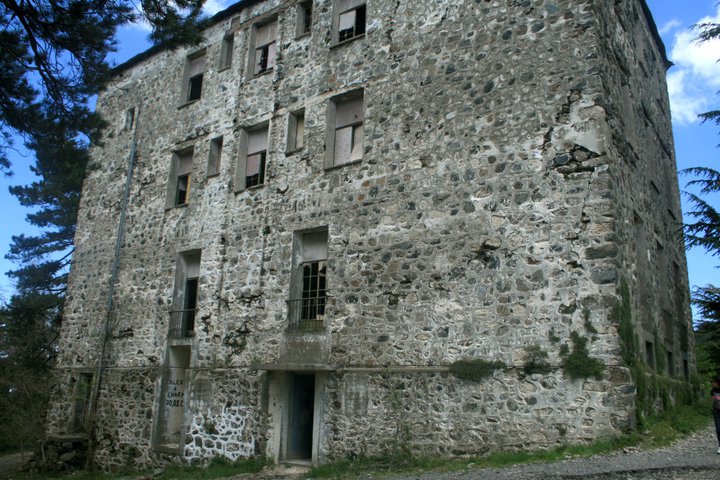
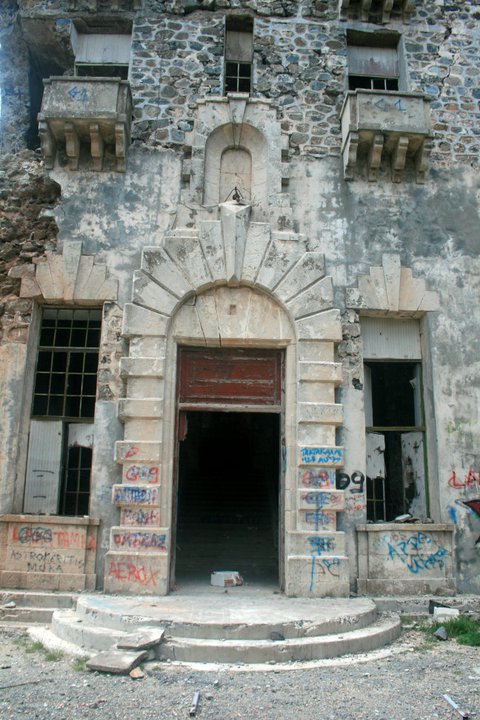
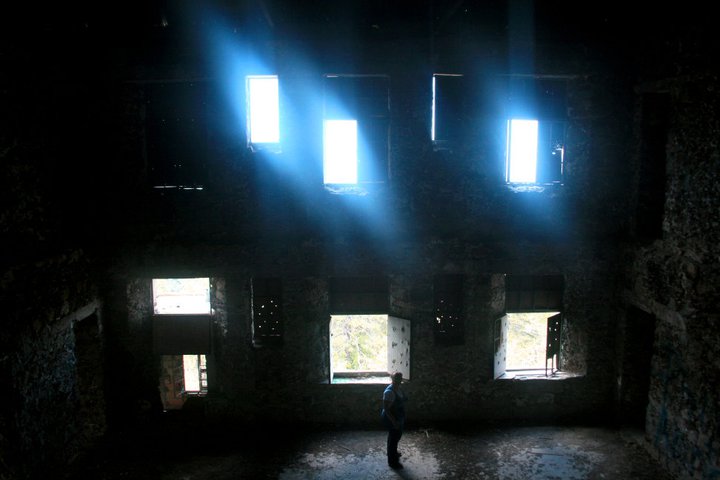
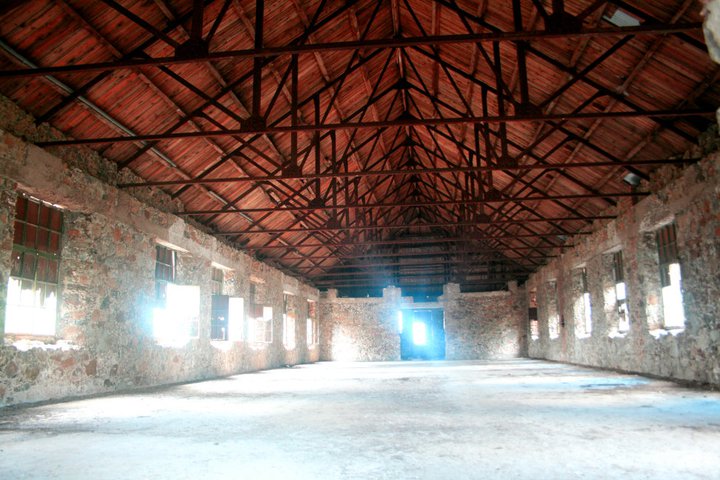
Today the hotel – which finally closed its doors for good sometime in the early 80s- with its imposing, towering thick walls, the empty swimming pool and the magnificent view remains deserted and inactive. A ruin. All that despite the numerous proclamations of its regeneration and revival. In sharp contrast to its former glories and glamour. The times when it was at the peak of its powers. When one world renewed celebrity after the other passed through its doors. When the parties held either inside one of its many exquisite ballrooms or outside surrounded by a richly endowment of natural beauty attracted like a magnet all of the islands good society. A time when kings and other royalty of the Arabic world – King Farouk of Egypt, the name that stands out- were lining up to stay in the rooms with the high walls and windows. Ah, the days of splendour past!
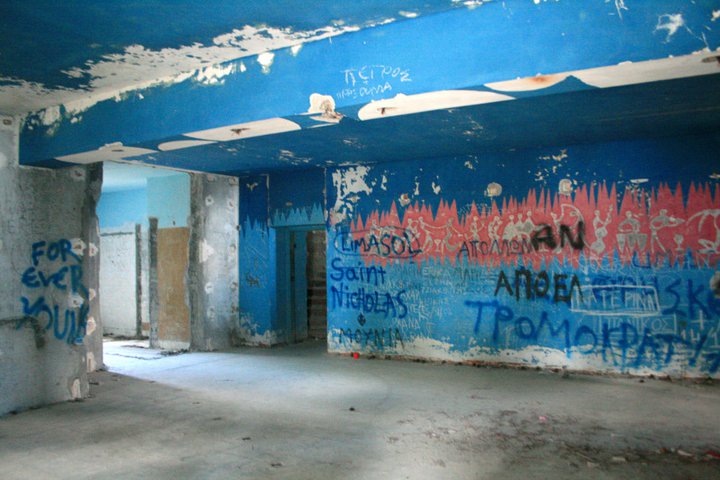
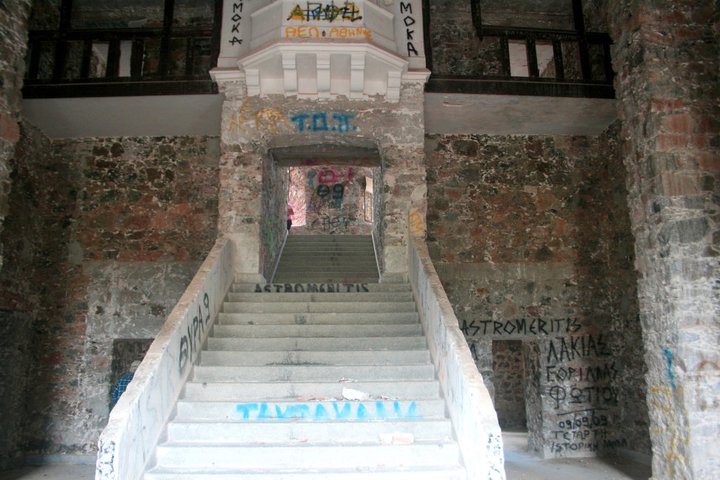
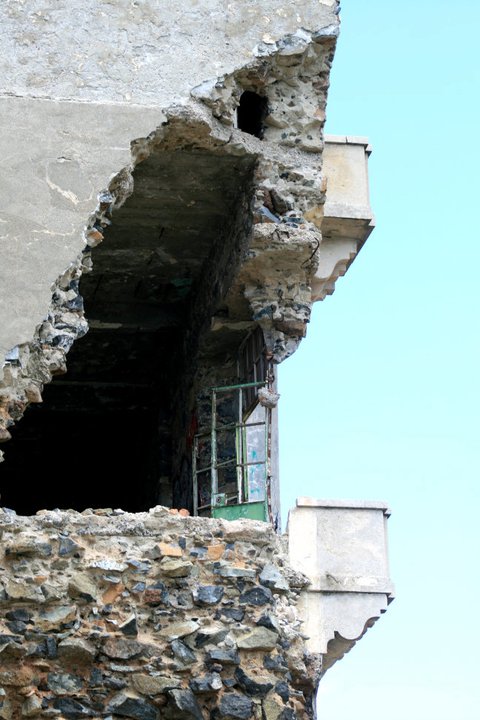
Even today with rot setting in every nuke and corner, of years in the “unwanted” list and with walls touched up by graffiti “artists” (some of them on the lewd side) the building still retains a huge part of its former glamour.
In regards to the future every now and then someone appears in the horizon, giving vent to new hope as well as – unfortunately- new disappointment. Promises are easy. “We will build 172 new rooms’. “We will have a modern restaurant running”. “A new casino will be created within the hotel”, “the old marble will be replaced and whatever has gone to ruin will be changed”, “in the place of the old 60s pool a new, modern one will be built”. An endless list of promises. Almost like the list of reasons that have supposedly led to the hotel’s ruin.
The stuff of legend
Built in the 1920’s Verengaria Hotel was known as the Hotel of Kings, thanks to the royalties that frequented this aristocratic manor, most notable of which was King Faruk of Egypt. Although it has been renovated a few times, it has been abandoned since the early 1980, but despite the ruin it has fallen into, the evidence is still there: once upon a long ago, this was an amazing building.
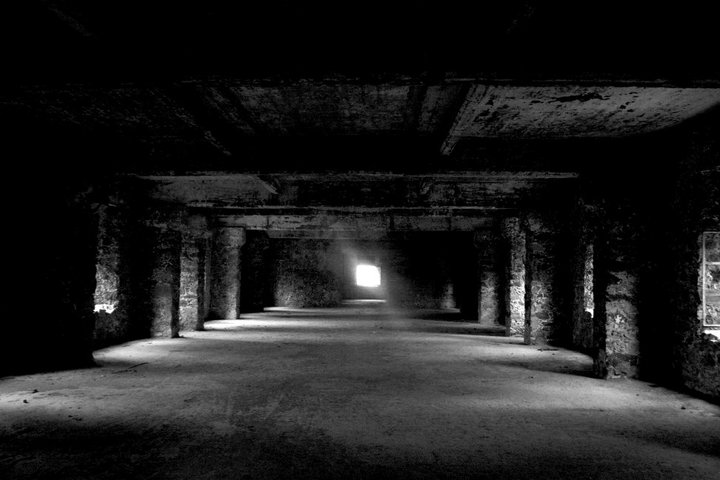
Recently there were rumours that a well-known developer had a vision of restoring it to its old glory, but the fact that no stone has yet to be lifted or a broken window moved has given rise to the stories that surround the hotel and has since given its new name: ghost hotel.
There’s the old cliché of the old man who gave the hotel to his sons, the inheritors did not take care of it and the old man cursed it. Another story tells of the owners being a rich couple. The woman got ill and died and the husband in despair killed himself by jumping from one of the windows of the second floor. Then there’s the myth of how the husband buried his wife in a room whose door was never opened (then again if the husband killed himself then the latter story doesn’t make sense). There’s the Hollywood horror story of an announcement being made, making the residents of the hotel running out without picking any of their stuff, some even jumping out the windows. The story with the father and his son, I read and heard in a variety of versions (sometimes the sons are two, others three). The enchantment is multiplied by the name of the owner, Kokkalos, which translates to “bone”.
Although I do not believe in ghosts, I must admit that I was pushed by some ethereal being and fell flat on my face. And who ever says that I was stupid enough to stand on a not-so-steady rock to take a photo, is simply a liar and is jealous of my many talents and God-given good looks….
.
 Hellenic People.Org