Source Wikipedia

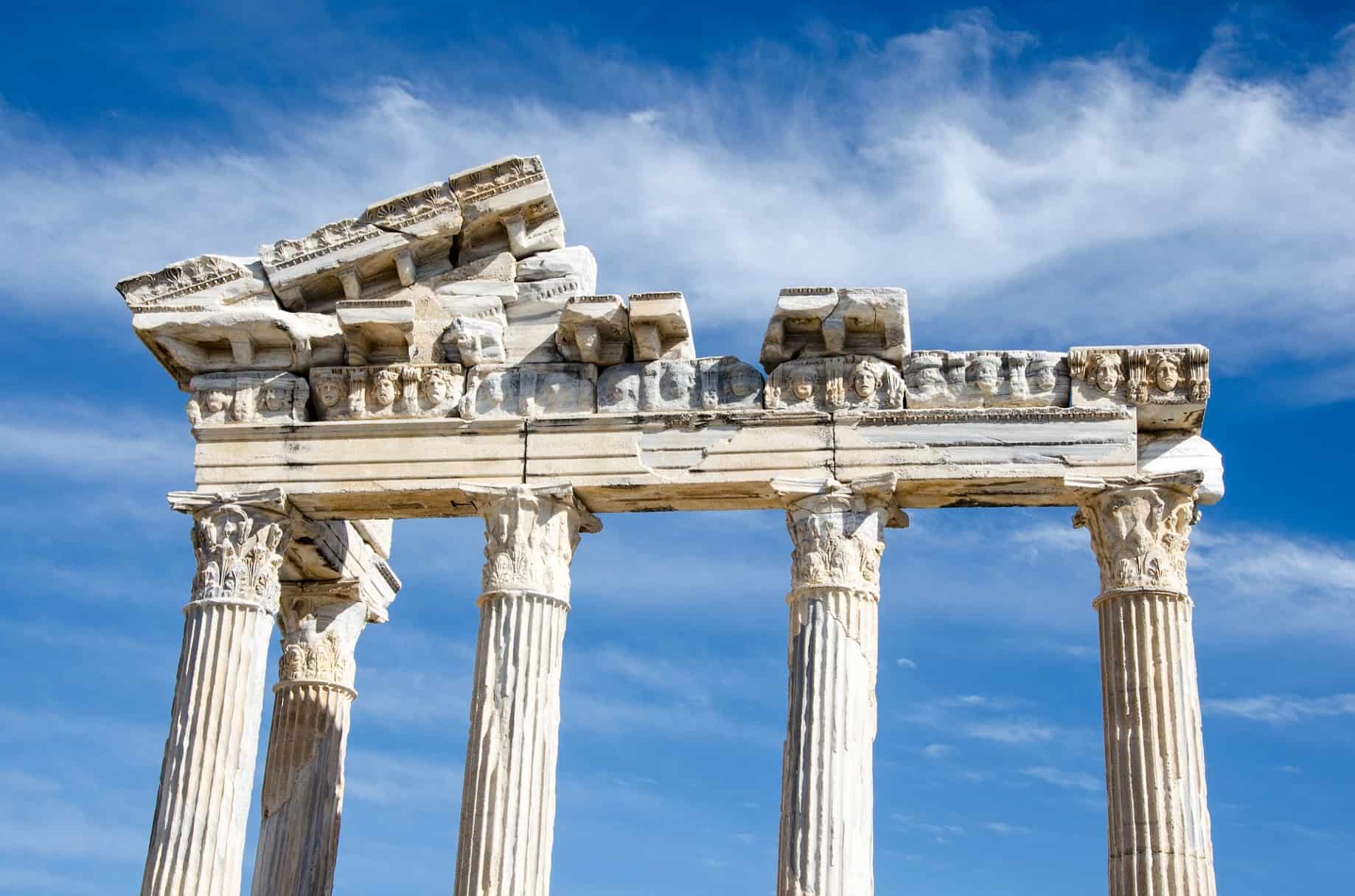
The Delphic Maxims are a collection of 147 maxims inscribed on the Temple of Apollo at Delphi.that provide a framework for life of an honest, worthy way of living.
A maxims is a short, concise statement expressing a fundamental moral rule or rule of conduct.
The most famous of the Delphic maxims, ‘Know yourself’, was one of the first three maxims carved above the entrance to the Temple of Apollo at Delphi in the sixth century B.C.
Originally, they were said to have been delivered by the Greek god Apollo‘s Oracle at Delphi, Pythia, and therefore were attributed to Apollo.
The 3rd century doxographer Diogenes Laertius and later the 5th century scholar Stobaeus attributed the Delphic maxims to the Seven Sages of Greece.
Contemporary scholars, however, maintain the original authorship of the Delphi Maxims is uncertain, and say that “most likely they were popular proverbs, which tended later to be attributed to particular sages.”
Throughout time, the aphorisms have spoken to humanity with insight and candour about shared fundamental experiences such as love, friendship, work; as well as about daily matters such as debt, reward, gossip, and goals.
Educators such as Quintilian, the Roman and rhetorician from Hispania born c. 35 AD, argued that students should study the maxims often as a way to improve their moral core.
The Stoics, for whom the Delphic Maxims were as familiar as the alphabet is to us, based their philosophy on the idea that right living leads to happiness.
The Delphic maxims that formed the very foundation of Stoicism cut to the core of our existence, telling us how to be fulfilled, content, at ease with others and ourselves – in short, how to be happy.

Entrance maxims
Three maxims are known to have been inscribed on the Temple of Apollo at Delphi at least as early as the 5th century BC, and possibly earlier.[7] These inscriptions are routinely referenced and discussed by ancient authors; Plato, for example, mentions them in six of his dialogues.[a] Their exact location is uncertain; they are variously stated to have been on the wall of the pronaos (forecourt), on a column, on a doorpost, on the temple front, or on the propylaea (gateway).[9]
Although the temple was destroyed and rebuilt several times over the years, the maxims appear to have persisted into the Roman era (1st century AD), at which time, according to Pliny the Elder, they were written in letters of gold.[7][10]
The maxims are as follows:
| No. | Greek | English[7] |
|---|---|---|
| 001 | Γνῶθι σεαυτόν | Know thyself |
| 002 | Μηδὲν ἄγαν | Nothing too much |
| 003 | Ἐγγύα πάρα δ’ Ἄτα | Give a pledge and trouble is at hand |
First maxim

Main article: Know thyself
The first maxim, “Know thyself”, is alluded to many times in ancient literature, and has been called “by far the most significant of the three maxims, both in ancient and modern times”.[11]
In Plato’s Charmides, Critias argues that self-knowledge is the same as temperance, and that the Delphic inscription, “Know thyself!”, is Apollo’s admonition to those entering the sacred temple: “Be temperate!”. He suggests that the sages who added the other two maxims misunderstood the purpose of the inscription, and “supposed that ‘Know thyself!’ was a piece of advice, and not the god’s salutation to those who were entering; and so, in order that their dedications too might equally give pieces of useful advice, they wrote these words and dedicated them.”[12]
Xenophon, in his Memorabilia, uses the maxim “Know thyself” as an organizing theme for his dialogue, in which Socrates explains that knowing oneself is the starting point for all good things, and failure to know oneself is the starting point of delusion, yet even from this starting point one cannot be sure one knows what is good and what is bad.[13]
Third maxim
The third maxim, “Give a pledge and trouble is at hand”, has been variously interpreted. The Greek word έγγύα, here translated “pledge”, can mean either (a) surety given for a loan; (b) a binding oath given during a marriage ceremony; or (c) a strong affirmation of any kind.[14] Accordingly, the maxim may be warning against any one of these things.
The correct interpretation of the maxim was being debated as early as the 1st century BC, when Diodorus Siculus discussed the question in his Bibliotheca historica.[15] In Plutarch’s Septem sapientium convivium, the ambiguity of the phrase is said to have “kept many from marrying, and many from trusting, and some even from speaking”.[16] Diogenes Laërtius (3rd-century AD) also makes reference to the maxim in his account of the life of Pyrrho, the founder of Pyrrhonism.[17] Exploring the origins of the Pyrrhonean doctrine of philosophical skepticism, Diogenes claims that the Delphic maxims are skeptical in nature, and interprets the third maxim to mean: “Trouble attends him who affirms anything in strong terms and confidently”.[18]
Analysing the various appearances of the maxim in Greek literature, Eliza Wilkins finds the opinion of the ancient authors on the meaning of έγγύα split between the two rival interpretations of “commit yourself emphatically” and “become surety”. Among Latin authors, however, the maxim is universally interpreted in the latter sense, as advice against giving surety.[19]
147 maxims of Stobaeus
In the 5th-century anthology of Stobaeus, there is a list of 147 maxims attributed to the Seven Sages of Greece.[20] Stobaeus cites a certain Sosiades as his source, but the identity of Sosiades is unknown, and it was once thought that this collection of maxims was of no great antiquity. However, parallel sayings have since been found in several ancient inscriptions, some dating to around 300 BC. These inscriptions also inform us that the original maxims were “carved on the stele at Delphi”.[21][22]
The maxims given by Stobaeus are as follows:
- Follow God (Επου θεω)
- Obey the law (Νομω πειθου)
- Worship the Gods (Θεους σεβου)
- Respect your parents (Γονεις αιδου)
- Be overcome by justice (Ηττω υπο δικαιου)
- Know what you have learned (Γνωθι μαθων)
- Perceive what you have heard (Ακουσας νοει)
- Be (or Know) Yourself (Σαυτον ισθι)
- Intend to get married (Γαμειν μελλε)
- Know your opportunity (Καιρον γνωθι)
- Think as a mortal (Φρονει θνητα)
- If you are a stranger act like one (Ξepsilon;νος ων ισθι)
- Honor the hearth [or Hestia] (Εστιαν τιμα)
- Control yourself (Αρχε σεαυτου)
- Help your friends (Φιλοις βοηθει)
- Control anger (Θυμου κρατει)
- Exercise prudence (Φρονησιν ασκει)
- Honour providence (Προνοιαν τιμα)
- Do not use an oath (Ορκω μη χρω)
- Love friendship (Φιλιαν αγαπα)
- Cling to discipline (Παιδειας αντεχου)
- Pursue honour (Δοξαν διωκε)
- Long for wisdom (Σοφιαν ζηλου)
- Praise the good (Καλον ευ λεγε)
- Find fault with no one (Ψεγε μηδενα)
- Praise virtue (Επαινει αρετην)
- Practice what is just (Πραττε δικαια)
- Be kind to friends (Θιλοις ευνοει)
- Watch out for your enemies (Εχθρους αμυνου)
- Exercise nobility of character (Ευγενειαν ασκει)
- Shun evil (Κακιας απεχου)
- Be impartial (Κοινος γινου)
- Guard what is yours (Ιδια φυλαττε)
- Shun what belongs to others (Αλλοτριων απεχου)
- Listen to everyone (Ακουε παντα)
- Be (religiously) silent (Ευφημος ιοθι)
- Do a favour for a friend (Φιλω χαριζου)
- Nothing to excess (Μηδεν αγαν)
- Use time sparingly (Χρονου φειδου)
- Foresee the future (Ορα το μελλον)
- Despise insolence (Υβριν μισει)
- Have respect for suppliants (Ικετας αιδου)
- Be accommodating in everything (Παςιν αρμοζου)
- Educate your sons (Υιους παιδευε)
- Give what you have (Εχων χαριζου)
- Fear deceit (Δολον φοβου)
- Speak well of everyone (Ευλογει παντας)
- Be a seeker of wisdom (Φιλοσοφος γινου)
- Choose what is divine (Οσια κρινε)
- Act when you know (Γνους πραττε)
- Shun murder (Φονου απεχου)
- Pray for things possible (Ευχου δυνατα)
- Consult the wise (Σοφοις χρω)
- Test the character (Ηθος δοκιμαζε)
- Give back what you have received (Λαβων αποδος)
- Down-look no one (Υφορω μηδενα)
- Use your skill (Τεχνη χρω)
- Do what you mean to do (Ο μελλεις, δος)
- Honor a benefaction (Ευεργεςιας τιμα)
- Be jealous of no one (Φθονει μηδενι)
- Be on your guard (Φυλακη προσεχε)
- Praise hope (Ελπιδα αινει)
- Despise a slanderer (Διαβολην μισει)
- Gain possessions justly (Δικαιως κτω)
- Honor good men (Αγαθους τιμα)
- Know the judge (Κριτην γνωθι)
- Master wedding-feasts (Γαμους κρατει)
- Recognize fortune (Τυχην νομιζε)
- Flee a pledge (Εγγυην φευγε)
- Speak plainly (Αμλως διαλεγου)
- Associate with your peers (Ομοιοις χρω)
- Govern your expenses (Δαπανων αρχου)
- Be happy with what you have (Κτωμενος ηδου)
- Rever a sense of shame (Αισχυνην σεβου)
- Fulfill a favor (Χαριν εκτελει)
- Pray for happiness (Ευτυχιαν ευχου)
- Be fond of fortune (Τυχην στεργε)
- Observe what you have heard (Ακουων ορα)
- Work for what you can own (Εργαζου κτητα)
- Despise strife (Εριν μισει)
- Detest disgrace (Ονειδς εχθαιρε)
- Restrain the tongue (Γλωτταν ισχε)
- Keep yourself from insolence (Υβριν αμυνου)
- Make just judgments (Κρινε δικαια)
- Use what you have (Χρω χρημασιν)
- Judge incorruptibly (Αδωροδοκητος δικαζε)
- Accuse one who is present (Αιτιω παροντα)
- Tell when you know (Λεγε ειδως)
- Do not depend on strength (Βιας μη εχου)
- Live without sorrow (Αλυπως βιου)
- Live together meekly (Ομιλει πραως)
- Finish the race without shrinking back (Περας επιτελει μη αποδειλιων))
- Deal kindly with everyone (Φιλοφρονει πασιν)
- Do not curse your sons (Υιοις μη καταρω)
- Rule your wife (Γυναικος αρχε)
- Benefit yourself (Σεαυτον ευ ποιει)
- Be courteous (Ευπροσηγορος γινου)
- Give a timely response (Αποκρινου εν καιρω)
- Struggle with glory (Πονει μετ ευκλειας)
- Act without repenting (Πραττε αμετανοητως)
- Repent of sins (Αμαρτανων μετανοει)
- Control the eye (Οφθαλμοθ κρατει)
- Give a timely counsel (Βουλευου χρονω)
- Act quickly (Πραττε συντομως)
- Guard friendship (Φιλιαν φυλαττε)
- Be grateful (Ευγνωμων γινου)
- Pursue harmony (Ομονοιαν διωκε)
- Keep deeply the top secret (Αρρητον κρυπτε)
- Fear ruling (Το κρατουν φοβου)
- Pursue what is profitable (Το συμφερον θηρω)
- Accept due measure (Καιρον προσδεχου)
- Do away with enmities (Εχθρας διαλυε)
- Accept old age (Γηρας προσδεχου)
- Do not boast in might (Επι ρωμη μη καυχω)
- Exercise (religious) silence (Ευφημιαν ασκει)
- Flee enmity (Απεχθειαν φευγε)
- Acquire wealth justly (Πλουτει δικιως)
- Do not abandon honor (Δοξαν μη λειπε)
- Despise evil (Κακιαν μισει)
- Venture into danger prudently (Κινδυνευε φρονιμως)
- Do not tire of learning (Μανθανων μη καμνε)
- Do not stop to be thrifty (Φειδομενος μη λειπε)
- Admire oracles (Χρησμους θαυμαζε)
- Love whom you rear (Ους τρεφεις αγαπα)
- Do not oppose someone absent (Αποντι μη μαχου)
- Respect the elder (Πρεσβυτερον αιδου)
- Teach a youngster (Νεωτερον διδασκε)
- Do not trust wealth (Πλουτω απιστει)
- Respect yourself (Σεαυτον αιδου)
- Do not begin to be insolent (Μη αρχε υβριζειν)
- Crown your ancestors (Προγονους στεφανου)
- Die for your country (Θνησκε υπερ πατριδος)
- Do not be discontented by life (Τω βιω μη αχθου)
- Do not make fun of the dead (Επι νεκρω μη γελα)
- Share the load of the unfortunate (Ατυχουντι συναχθου)
- Gratify without harming (Χαριζου αβλαβως)
- Grieve for no one (Μη επι παντι λυπου)
- Beget from noble routes (Εξ ευγενων γεννα)
- Make promises to no one (Επαγγελου μηδενι)
- Do not wrong the dead (Φθιμενους μη αδικει)
- Be well off as a mortal (Ευ πασχε ως θνητος)
- Do not trust fortune (Τυχη μη πιστευε)
- As a child be well-behaved (Παις ων κοσμιος ισθι)
- As a youth – self-disciplined (ηβων εγκρατης)
- As of middle-age – just (μεσος δικαιος)
- As an old man – sensible (πρεσβυτης ευλογος)
- On reaching the end – without sorrow (τελευτων αλυπος)
Additional Maxims, most likely local variants, have been identified from various sources including:
4. Obey the virtuous
11.Live without sorrow
13. Avoid the unjust
14. Testify what is right
15. Control pleasure
22. Praise virtue
27. Train your relatives
55. Believe in time
56. Receive for the pleasure
57. Prostrate before the divine
60. Do not boast in might
62. Use the one who has the same interests as you.
64. Be embarrassed to lie
66. If you believe in something do not be scared to act for it
68. Be firm on what has been agreed
The Delphic Maxims are guidelines and advice, and cannot be read as absolutes, especially given how many of them are very specific to the times they were written in, such as Delphic Maxim 95 – Γυναικος αρχε (“Rule your wife”).

 Hellenic People.Org
