1. Olympics

The first record of the Olympic Games being held was in 776 B.C. when a cook named Coroebus won the only event – a 630-feet (192-meter) footrace called the “stade” to become Olympic champion.
However, the games had likely been going on for many years by that time. They were held every four years in Olympia, on the western Peloponnese peninsula. These ancient games were part of a religious festival honoring the god Zeus.
The modern Olympics began in 1896, thanks mainly to the efforts of Baron Pierre de Coubertin, inspired by a visit to the ancient Olympic site. The first modern Olympics took place in Athens, Greece. There were 280 participants from 13 nations (all male) who competed in 43 events, including track and field, gymnastics, swimming, wrestling, cycling, tennis, weightlifting, shooting, and fencing.
The modern Olympics took off after 1924, when the VIII Games were held in Paris. Around 3,000 athletes (including more than 100 women) from 44 nations competed. The Winter Olympics also began that year and included events like figure skating, ice hockey, bobsledding, and the biathlon.
2. Astrolabe

The astrolabe is one of the most significant ancient Greece inventions. It is an instrument used to make astronomical measurements, like the altitudes of celestial bodies.
Its invention is often credited to Claudius Ptolemy, a famous Greek astronomer who lived in the Roman Empire during the 2nd century A.D., or even earlier, to Apollonius of Perga between 220 and 150 B.C. or to Hipparchus. It was essentially an analog calculator capable of working out several astronomical problems.
https://giphy.com/embed/xT5LMVOMcazR3xEdaM
In the eighth century, Muslim astronomers introduced angular scales to the design and began using the astrolabe for navigation and to find the direction of Mecca for daily prayers.
Its use by mariners continued until the development of reliable mechanical clocks in the 17th and 18th centuries.
3. Theatre

Today, watching a play, movie, or musical is a major source of entertainment for people across the globe. However, did you know that the ancient Greeks introduced the theatre as we understand it today?
An early form of drama emerged in Greece around the 6th century B.C. Although theater in India may have preceded this, the Greek version influenced the later development of theater in the West.
Greek dramatists also created plays in multiple genres, including tragedy, comedy, and satire. Many of the plays they wrote are still relevant and have helped shape modern Western culture.
The ancient Greeks also constructed theaters capable of seating hundreds or thousands of people.
SEE ALSO: WORLD’S FIRST GRAPHENE-ENABLED PEROVSKITE SOLAR FARM IN GREECE
4. Water Clock

The water clock, known as Clepsydra, was introduced into ancient Greece around 325 BC. It is a timepiece that measures time by the regulated liquid flow into or out of a vessel. The liquid is measured, giving time.
Water clocks are ancient and are known to have existed in Babylon, Egypt, and Persia around the 16th century B.C. However, the Greeks refined this technology to measure a wide range of discrete events.
It was used in trials, where the time of the lawyers and the witnesses’ speeches were measured to ensure that everyone spoke for the same amount of time.
5. Greek Fire

Greek fire was developed in Byzantium in the 7th century. It was an incendiary weapon that used a petroleum-based mixture. However, other types of incendiary substances, such as pitch, naphtha, sulfur, and charcoal, have been used since ancient times to make flaming arrows, firepots, and other weapons. In later centuries, saltpeter and turpentine were used, and these mixtures were known to the Crusaders as Greek fire or wildfire.
What is often thought of as true Greek fire was likely a petroleum-based mixture and was probably invented during the reign of Constantine IV Pogonatus (668–685) by Callinicus of Heliopolis, a Greek-speaking Jewish refugee who had fled the Arab conquest of Syria. The substance could be thrown in pots or discharged from tubes; it apparently caught fire spontaneously and could not be extinguished with water.
https://giphy.com/embed/3oEjHOoleGnLc5mIko
6. The lever

The earliest evidence of a lever dates back to the ancient Near East, sometime around 5000 B.C., and they were used in ancient India and Egypt to lift water and to move heavy objects.
However, some of the earliest remaining writings about levers date from the 3rd century B.C. and were written by the Greek polymath Archimedes. Archimedes first explained the underlying ratios of force, load, and distance from the fulcrum point and provided mathematical principles and laws governing the use of levers.
7. The Crane

Cranes are the ultimate help when you need to lift heavy objects while constructing a building or transferring supplies from one place to another. Today, we cannot imagine the world of construction without cranes.
But do you know when and who invented it? Archeologists have found cranes in ancient Greece dating to the late 6th century B.C., making them another important ancient Greek invention.
8. Pap Smear
George Papanikolaou – a veteran of Greece’s medical corps, created the cervical screening method. This test detects changes in cervical cells before cancer develops.
This, in turn, has enabled doctors to treat cervical cancer earlier, leading to improved outcomes for millions of women.
The introduction of the Pap smear test reduced deaths due to cervical cancer by almost 70% over the last 50 years. Thus, Greece has gifted the world with incredible inventions, even in medicine.
9. The Watermill

This ancient Greek technology had a bigger impact on modern technology than you think. After all, using water power to grind wheat allowed it to be turned into a mass-produced staple food.
The Greeks invented the two main components of watermills, the waterwheel, and toothed gearing. Some of the earliest evidence of a water-driven wheen appears in the technical treatises written by the Greek engineer Philo of Byzantium (ca. 280−220 BC).
10. Archimedes Screw

A water screw is a machine that transfers water from a low-lying area into irrigation ditches. Water is pumped by turning a screw-shaped surface inside a pipe.
While Archimedes did not invent the screw bearing his name, he did write about the mathematical principles behind it, and this writing led to the screw being attached to his name.
11. Catapult

The catapult was likely invented in several different places around the same time, including a 4th-century mangonel in China, and was used by the Greek army in 399 BC.
They may have been introduced to Greece by Dionysius, the Elder of Syracuse.
https://giphy.com/embed/fjyGFXQyf3AJWB6dqc
Later, wheels were added to catapults by the Romans to make them more maneuverable.
Ancient Greek Inventions Still Used Today
August 17, 2023
FACEBOOKTWITTERWHATSAPPLINKEDINEMAIL

Though some may not know it, many ancient Greek inventions created centuries ago still play an important role in society today. Aside from core theoretical concepts such as philosophy and democracy, among others things, ancient Greeks contributed many mechanical inventions to the world that are still essential to our lives.
These devices range from the simplest objects like umbrellas to the more complex technological mechanisms such as computers. In the present, we use them without thinking. At that time, however, they were absolutely revolutionary. Here is a list of a few of the objects that changed the way people lived in the past as well as present.
Alarm clocks and odometers
The first Ancient Greek invention on the list that is still in use is the alarm clock. It was created in ancient Greece by Ctesibus, a Hellenistic engineer and inventor.
Much to the dismay of all those who love to sleep in, Ctesibus cleverly developed an elaborate system of dropping pebbles onto a gong in order to make a sound. That sound was set to occur at specific time intervals that could be used to wake people up or just remind them of important events throughout the day.
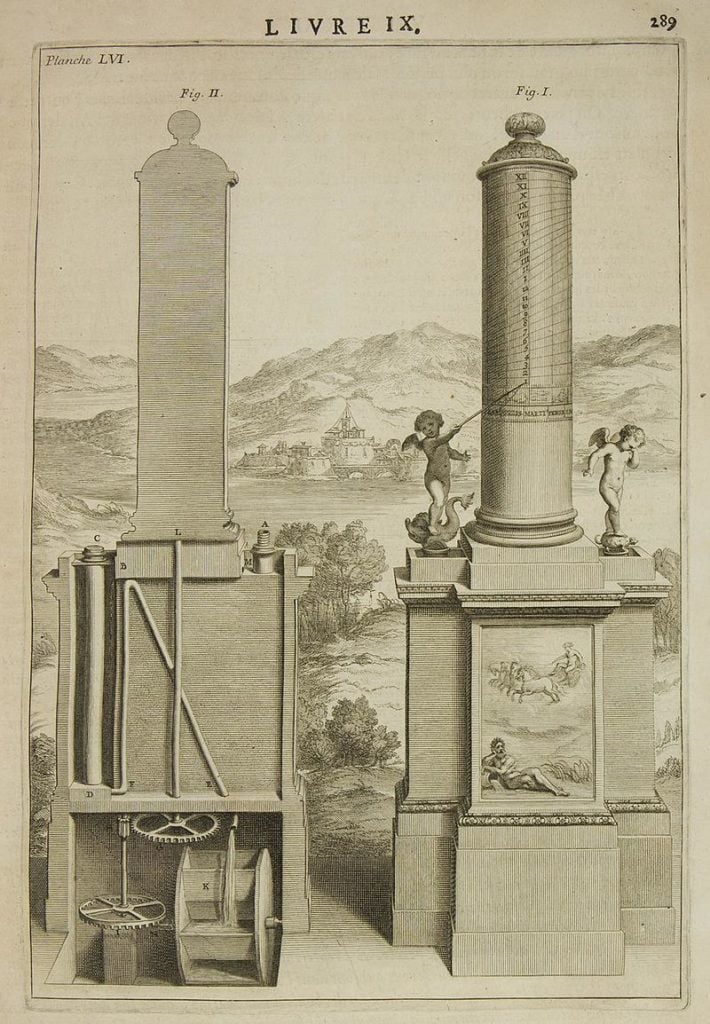
The odometer is another Greek invention. The tool measures the distance traveled by a vehicle. Yet, it was also invented and used in Greece. There is a great debate, however, as to which ancient Greek came up with the invention.

Some say it was Heron of Alexandria, one of the most prolific inventors of antiquity, who created the odometer. Yet, others claim it was Archimedes who first constructed the incredibly useful tool. Despite the lack of clarity surrounding the identity of its creator, the odometer aided ancient Greek civilization in constructing roads, for example.
This enabled them to link the towns at the edges of the vast Greek world by an intricate web of roadways, increasing trade. This, in turn, created an important interconnection across the ancient world.
Central heating and thermometers
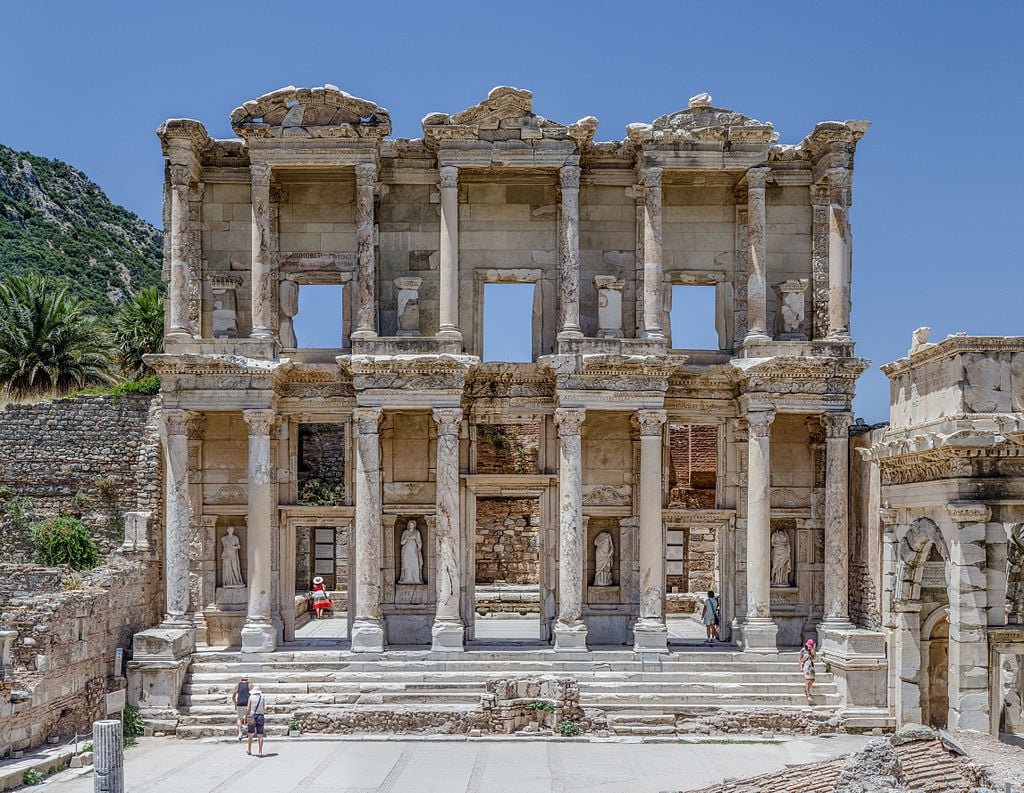
The ancient Greeks also created central heating and thermometers, inventions that man could not live without nowadays. According to archaeological discoveries at the ancient Greek site in Turkey, the Temple of Ephesus was kept warm in antiquity by using flues under its floor to circulate the heat from fires kept burning underneath the sprawling complex.
The original concept for today’s thermometer also dates back almost two thousand years. The Greeks of Alexandria were the first who figured out how air expands when exposed to high temperatures. Philo of Byzantium then applied that technique to create the world’s first.
Maps and levers
The Greek scientist Anaximander was the one who conceptualized the ideas of longitude and latitude, both of which are required to create an accurate map. Later, Strabo and Eratosthenes created the first examples using his discoveries. At the time, those maps spanned the entire known world.
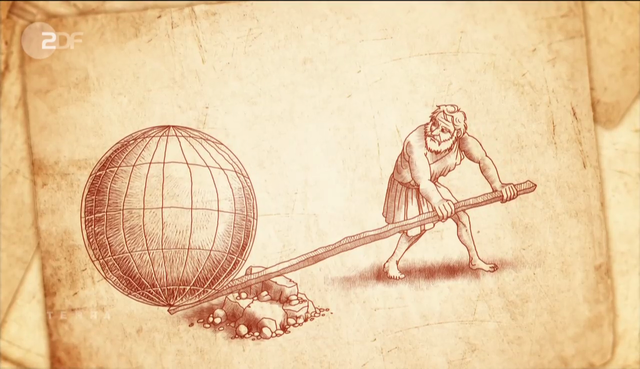
It was the ancient Greek mathematician Archimedes who described the lever in 206 B.C., which had and continues to have an unlimited amount of uses in all types of construction,.
Eventually, his invention made the construction of iconic, massive buildings of the ancient era possible. The lever was even used to help ships disembark from port and set sail.
Automatic doors and vending machines

Another invention that we constantly use without any idea of its origin is the automatic door. Of course, its ancient prototype was powered by steam rather than electricity. Heron of Alexandria created a hydraulic system and installed it at an Alexandrian temple, complete with fire, water, and steam, which triggered a system to open a pair of curtains.
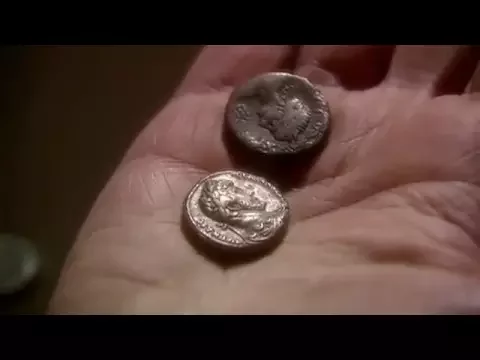
Heron was a brilliant Greek mathematician and engineer who resided in his native city of Alexandria, Roman Egypt, and was one of the greatest experimenters of his time. The next time you kick a vending machine trying in vain to release your snack from the grips of the mechanic claws, think of him and how far it has come over the years.
The mathematician created the very first vending machine in the world in approximately 10 to 70 AD. Of course, in those days, you would put a coin into a slot at the top of the machine for a dose of holy water rather than potato chips. When a coin was inserted, it landed on a pan. Its weight then triggered the opening of a valve that held the holy water, releasing a small amount of the liquid.
Cranes and cement
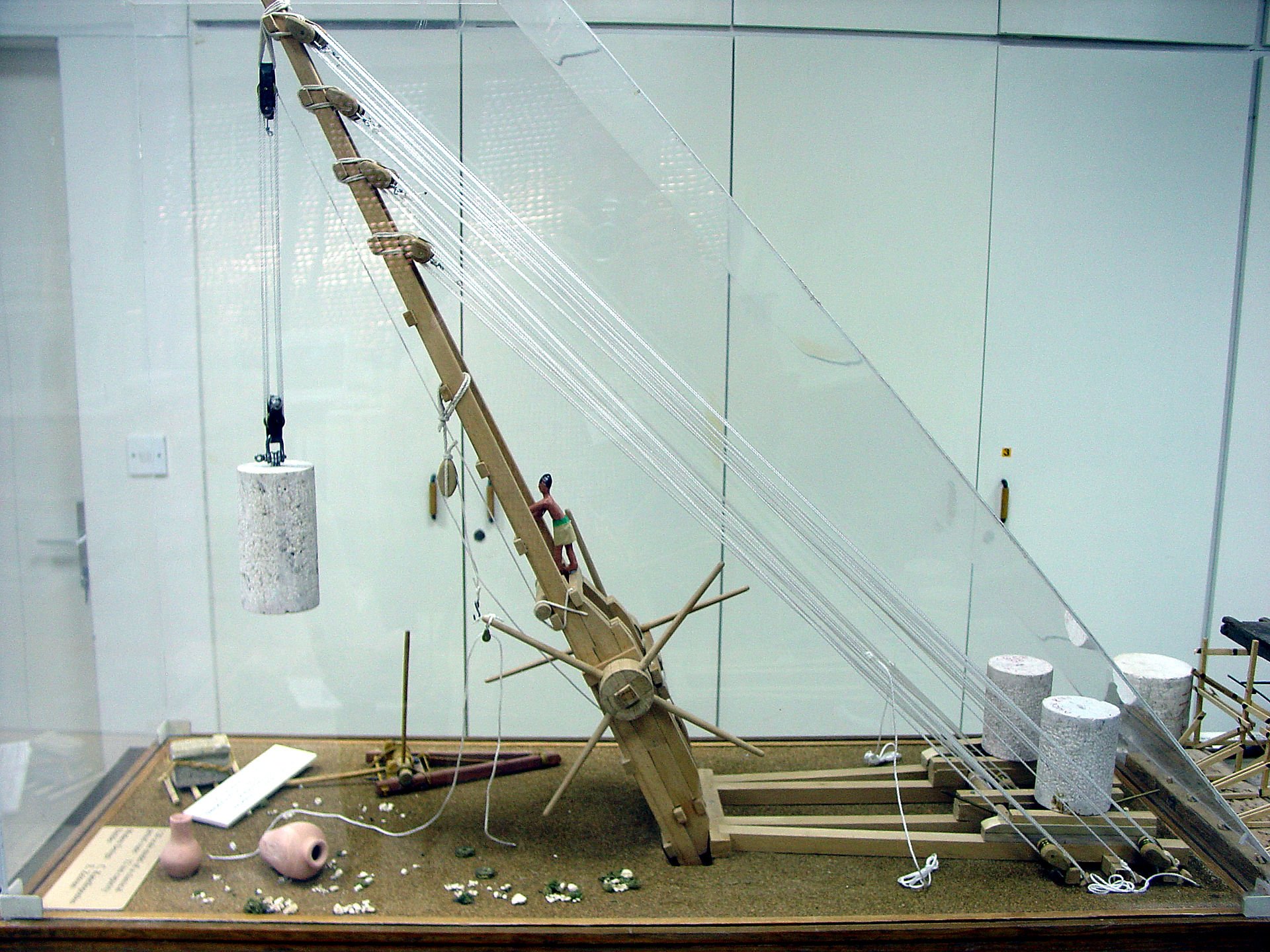
The ancient Greeks, known for their magnificent temples and other constructions, also invented the crane back in 6th century BC. This undoubtedly helped in lifting the heavy stones that were utilized in building their temples and other structures.
Many blocks they used on temples such as the Parthenon still have obvious gaps on them from the cranes that lifted them into place. In antiquity, ancient Greeks lifted heavy blocks by stringing ropes, attached to the wooden cranes, through the holes in the stones.
Cement is another useful material building element the ancient Greeks invented around 100 B.C. They made it by adding limestone to a mixture of clay, water, and sand. Although more commonly found in the Roman world, in antiquity, they often used it to create homes and other buildings, though not structures like the Parthenon. They constructed buildings by utilizing the “dry” method without mortar.
Umbrellas
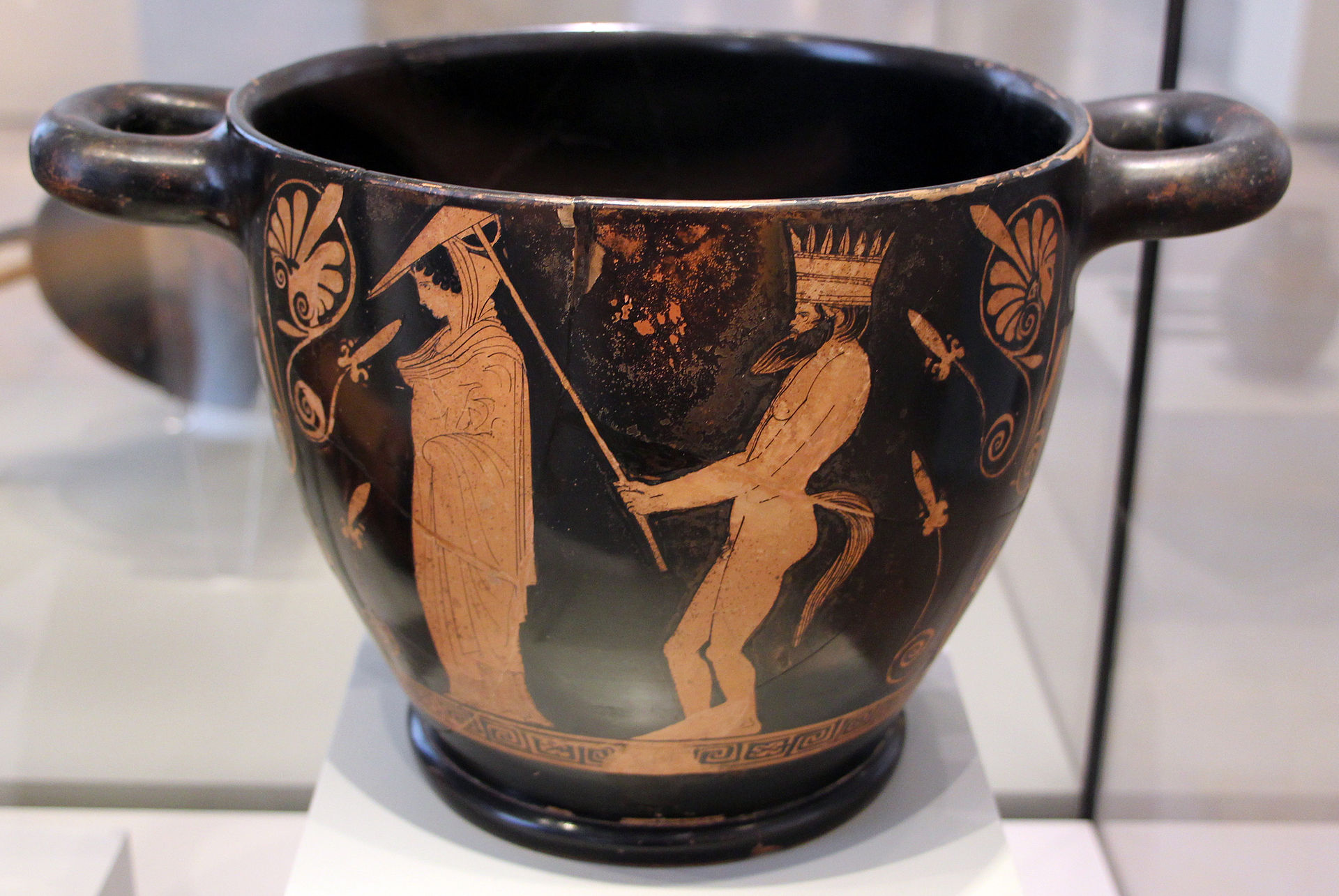
While life in ancient Greece was much different than it is today, we still have many things in common, one being rain. Depictions in ancient wall paintings, for example, show Greeks using umbrellas made of bones or wooden sticks covered by leaves or wood panels as far back as the 4th century BC.
Ancient Greeks used umbrellas to block both the rain and the sun. However, men considered umbrellas highly feminine and rarely used them themselves. Most often, slaves or servants carried them to shield the women of the upper class from the elements.
The world’s first computer
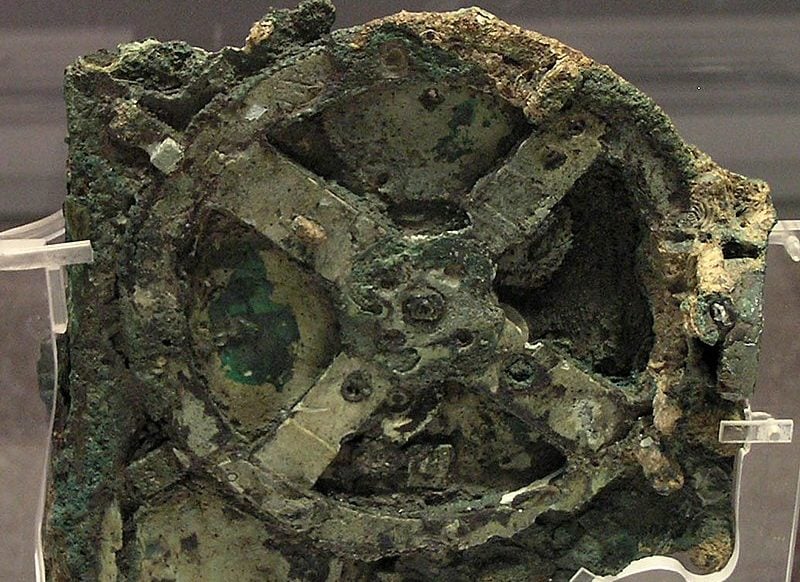
The day the Antikythera Mechanism was discovered in 1901 is celebrated across the scientific world as one of the most significant and impressive inventions of the ancient Greeks. This astoundingly intricate machine is a device which many scientists consider the world’s first computer.
Greek sponge divers discovered the Antikythera Mechanism in an ancient shipwreck in 1901. After numerous studies, researchers estimated it was created some time between 150 BC and 100 BC. A later study places it at 205 BC, just seven years after the death of Archimedes.

Now—exactly 120 years later—a brilliant group of researchers from University College London (UCL) has created the astounding machine once again using 3-D imagery. Its recreation was a thing of amazing genius and great beauty. It also allowed a new and better understanding of its function and how it worked.
As only eighty-two of the mechanism’s original fragments exist—comprising just one third of the entire calculator—researchers were initially stymied as to its full capabilities. Trying to reach an understanding of the front of the mechanism containing most of the gears has in fact been a bit of a Holy Grail for marine archaeologists and astronomers.
Using computer modelling, the UCL researchers were able to reconstruct the ancient device however, allowing them to grasp its use more fully. Employing the information gleaned from recent x-rays of the computer and their knowledge of ancient Greek mathematics, they were then able to determine that it functioned according to cycles of the planets Venus and Saturn.
Ancient Greeks at the forefront of science and technology
The items the ancient Greeks invented might be commonplace for us today. Yet, in antiquity, they marked the birth of science and technology, the two elements at the roots of man’s social, cultural, and economic advancement.
It is thanks to them, therefore, that we can appreciate much of what we as a society and humans have achieved in the time since. For what would the world be like now without the devices the ancient Greeks so ingeniously invented so many years ago?
See all the latest news from Greece and the world at Greekreporter.com.

 Hellenic People.Org
